Dental Implants vs Dentures: Which Is the Better Long-Term Investment?
Dental Implants vs Dentures: Which Is the Better Long-Term Investment?
If you are missing one or more teeth, the two most common tooth replacement solutions your dentist will discuss are dental implants and dentures. Both restore the appearance and function of your smile — but they work very differently, feel very different in day-to-day life, and represent very different long-term investments.
At Dentist Altrincham, Dr. Satnam Poonia has helped hundreds of patients navigate this exact decision. This guide breaks down the comparison honestly, covering cost, comfort, longevity, bone health, and the factors that matter most to patients across Altrincham, Sale, Hale, and the wider Greater Manchester area.
What Are Dental Implants?
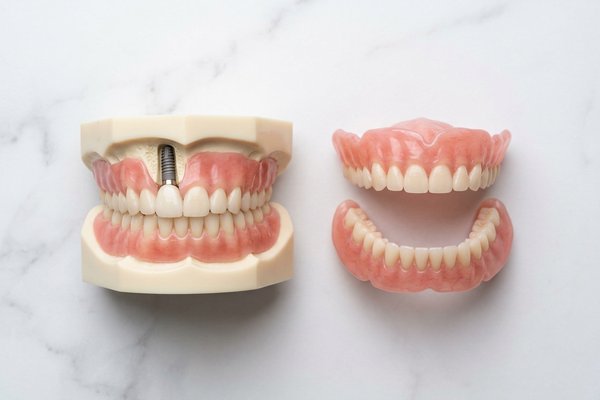
A dental implant is a small titanium post surgically placed into the jawbone, acting as an artificial tooth root. A custom-made crown, bridge, or denture is then attached to the top, creating a permanent, fixed tooth replacement that looks, feels, and functions exactly like a natural tooth.
Dental implants are the only tooth replacement option that:
- Integrates directly with the jawbone through osseointegration
- Prevents bone loss following tooth extraction
- Feels and functions indistinguishably from a natural tooth
What Are Dentures?
Dentures are removable appliances — either full (replacing all teeth in an arch) or partial (replacing several teeth) — that sit over the gums. Modern dentures are far more natural-looking and comfortable than older versions, but they remain a removable, surface-level solution that does not address the underlying bone.
Dentures are:
- Non-surgical — no implant placement required
- Immediately available in some cases
- More affordable upfront than implants
- Removable for cleaning each day
Dental Implants vs Dentures: Side-by-Side Comparison
| Feature | Dental Implants | Dentures |
|---|---|---|
| Fixed or removable | Fixed (permanent) | Removable |
| Natural appearance | Excellent | Good to very good |
| Natural feel | Excellent — like real teeth | Less natural, can shift |
| Bone preservation | Yes — prevents bone loss | No — bone loss continues |
| Eating ability | Full, unrestricted function | Restricted with hard or sticky foods |
| Speech | Normal from day one | Can affect speech initially |
| Maintenance | Brush like natural teeth | Remove and clean daily |
| Lifespan | 20-30+ years (potentially lifetime) | 5-10 years before replacement |
| Upfront cost (Altrincham) | £2,000-£3,500 per tooth | £500-£2,500 per arch |
| Long-term cost over 20 years | Lower (minimal replacement needed) | Higher (multiple replacements required) |
| Surgical procedure required | Yes | No |
Which Is Better in the Long Term?
For patients who are suitable candidates, dental implants are widely regarded as the superior long-term option for the following reasons:
1. Bone Preservation
When a tooth is lost, the jawbone beneath it begins to resorb — shrink — within months. Dentures rest on the gums and do nothing to stop this process. Over years, bone loss can significantly alter facial structure, leading to the sunken appearance commonly associated with long-term denture wearers. Dental implants stimulate the bone exactly as natural tooth roots do, preventing this deterioration entirely.
2. Unrestricted Functionality
Implants restore full chewing power, meaning patients can eat whatever they like — hard fruits, crusty bread, steak — without restriction or anxiety. Dentures, particularly full dentures, often require dietary adjustments and can feel insecure, especially as bone loss progresses over the years.
3. Long-Term Cost Efficiency
While implants have a higher upfront cost, dentures typically need to be relined or fully replaced every 5-10 years as the gum and bone change shape beneath them. Over a 20-year period, the cumulative cost of multiple denture replacements can equal or exceed the initial cost of implants — without ever delivering the same quality of experience.
4. Confidence and Quality of Life
Implant patients consistently report higher satisfaction, greater confidence, and a far superior quality of life compared to denture wearers. The security of fixed teeth — no adhesives, no removal, no risk of slipping at an inopportune moment — cannot be overstated.
When Might Dentures Be the Right Choice?
Dentures remain a valid option in certain circumstances:
- When implants are not clinically suitable — for example, in patients with severe bone loss who are unable or unwilling to undergo bone grafting
- When upfront cost is a significant constraint — although finance options at Dentist Altrincham make implants more accessible than most patients expect
- As a temporary solution while awaiting implant treatment or while bone grafts heal
Frequently Asked Questions
Q: Can I convert from dentures to implants later on?
A: In many cases, yes — although bone loss from years of denture wearing may mean bone grafting is required first. Dr. Poonia will assess your individual situation at your consultation and present all available options clearly.
Q: Are implant-retained dentures a useful middle ground?
A: Yes — implant-retained dentures use 2-4 implants to anchor a removable denture securely in place. This combines some key benefits of implants — stability and bone stimulation at implant sites — with a lower overall cost than full fixed implants. Dr. Poonia offers this option at Dentist Altrincham.
Q: Is dental implant surgery painful?
A: The procedure is carried out under local anaesthetic and most patients are genuinely surprised by how comfortable the experience is. Mild post-operative soreness resolves quickly, and sedation dentistry is available for anxious patients at our Altrincham practice.
The choice between dental implants and dentures is one of the most important decisions you will make for your long-term oral health and confidence. Book a consultation with Dr. Satnam Poonia at Dentist Altrincham today for a thorough assessment and honest, expert advice tailored to your specific circumstances.
Book your dental implants consultation at Dentist Altrincham
